Before You Invest
What every property
owner should know.
Most infrastructure failures are not random. They are the predictable outcome of decisions made weeks or months before installation day. This knowledge base exists to help property owners make better decisions before any money is spent.
01 — How to properly size an inverter
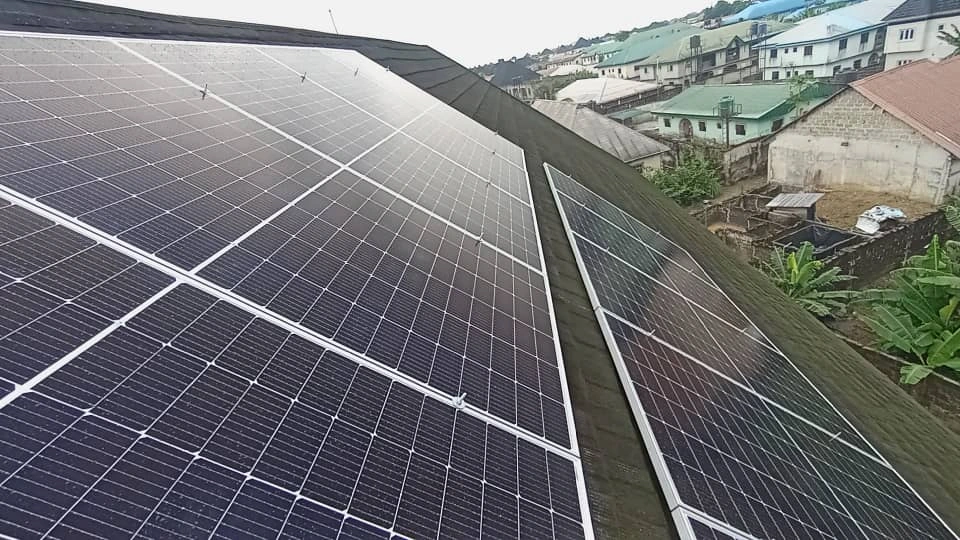
The most common mistake in solar installations is sizing the inverter to average consumption rather than peak demand. When your air conditioning, refrigerator, and water pump all start simultaneously — which happens every morning — the combined startup current can be three to four times their rated wattage.
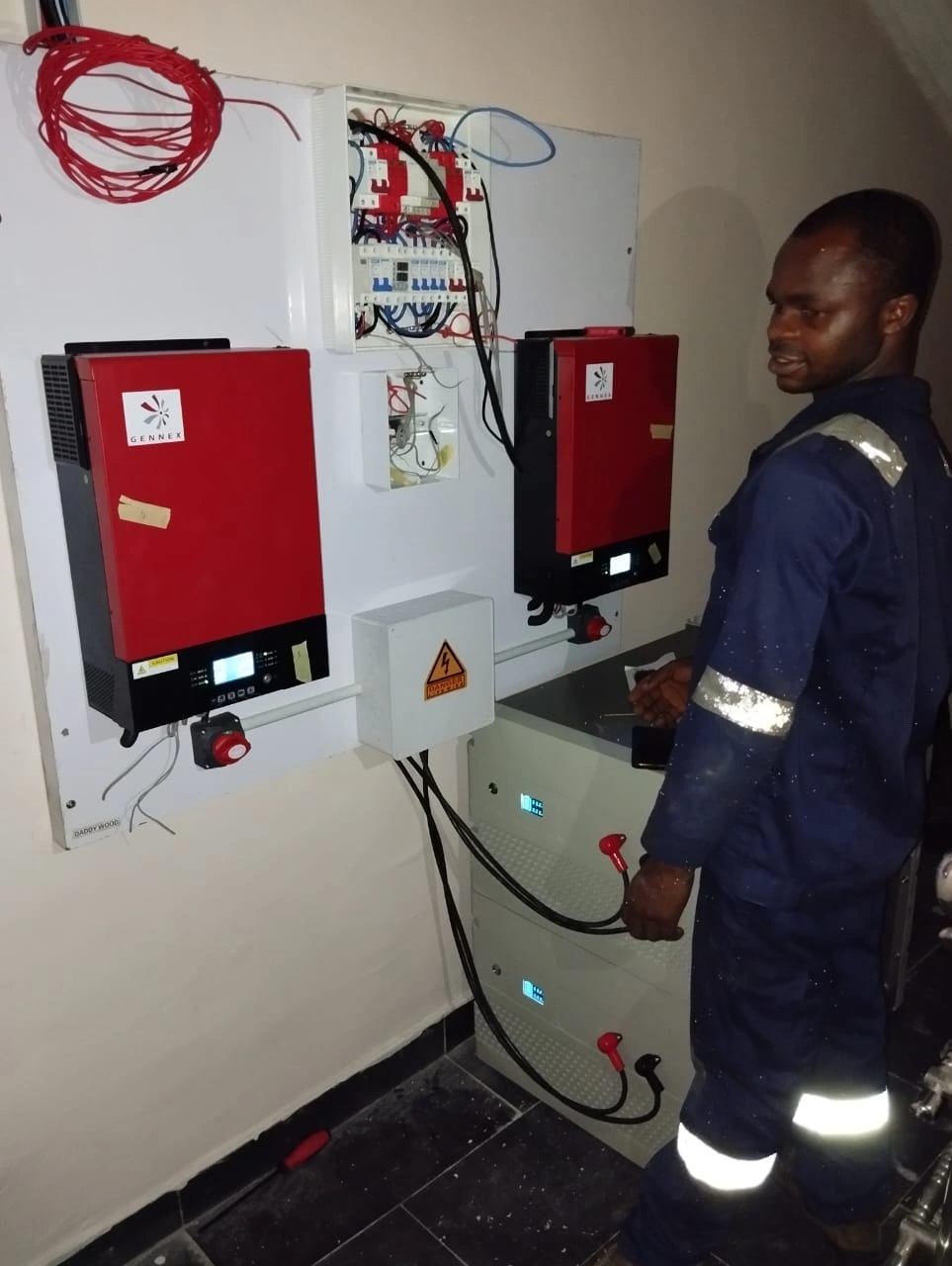
A correctly sized inverter accounts for this startup surge, allows a 20-25% headroom above calculated peak load, and is matched to your battery bank's charge/discharge rate. Undersizing an inverter by even 20% will cause the system to trip during peak demand — precisely when it is most needed.
- Calculate peak load by summing all critical appliances at startup, not at steady-state consumption
- Add 20-25% headroom to your peak load figure before selecting inverter size
- Match inverter input voltage to your battery bank (48V systems are standard for anything above 3kVA)
- Ensure your inverter is compatible with your solar charge controller and battery chemistry
- Size for future expansion — adding capacity later costs significantly more than getting it right first
02 — Battery lifespan realities
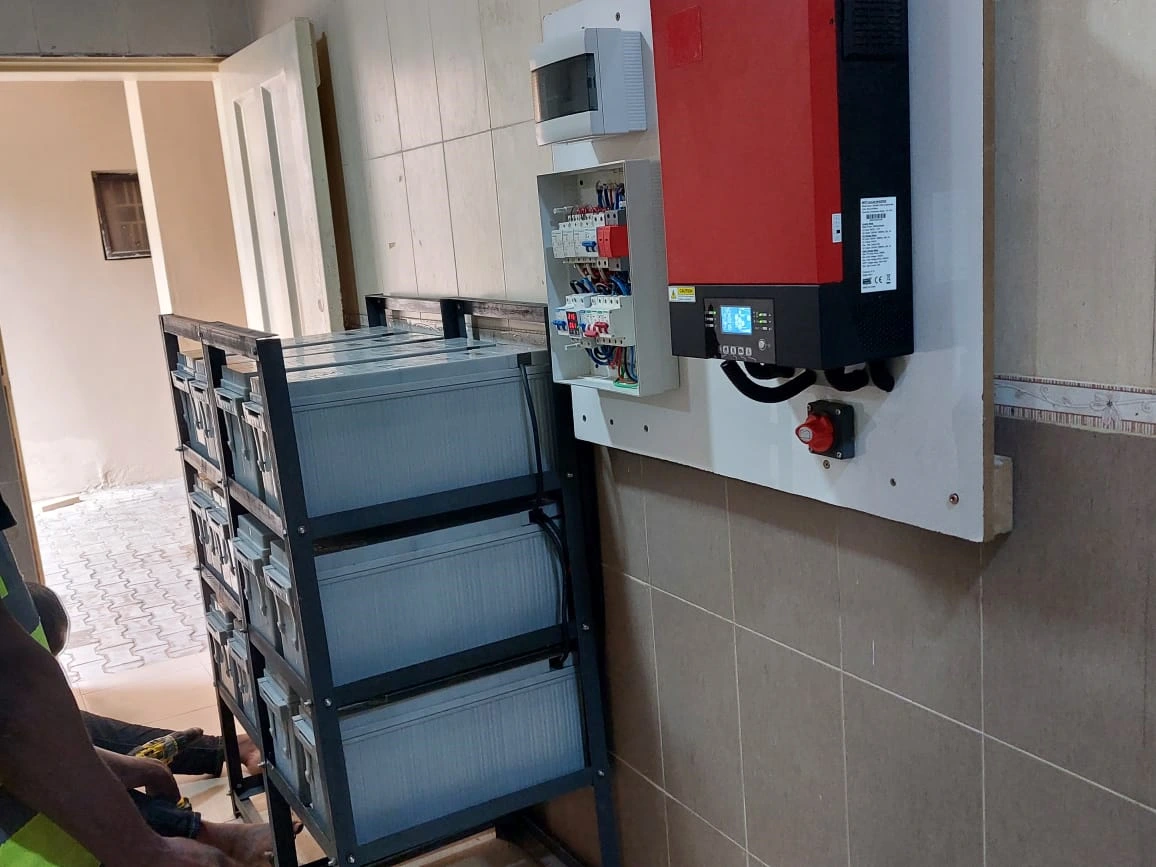
Lithium iron phosphate (LiFePO4) batteries are the current standard for serious solar installations. They offer 3,000-5,000 charge cycles at 80% depth of discharge, compared to 300-500 cycles for sealed lead-acid alternatives. But even the best batteries degrade faster than they should when conditions are wrong.
Heat is the primary enemy. Every 10°C above 25°C approximately doubles the rate of capacity degradation. This means a battery room without proper ventilation or air conditioning in Lagos will lose years of life, regardless of battery quality.
- Maintain battery room temperature below 35°C — ideally 20-25°C for maximum lifespan
- Operate at 20-80% depth of discharge for daily cycling, not 0-100%
- Use a battery management system (BMS) — non-negotiable for any lithium installation
- Never mix old and new batteries, or batteries of different capacities, in the same bank
- Ensure proper ventilation — hydrogen off-gassing from lead-acid, heat from lithium
03 — Why cable quality determines system reliability
Cables are rarely visible once an installation is complete, which is why they are the most common place for cost-cutting. It is also the most consequential place to cut costs. Undersized cabling in a solar DC circuit creates resistance proportional to its length squared. That resistance generates heat. That heat degrades insulation, corrodes terminals, and in serious cases causes fires.
In a 48V DC system, the voltage is low but the current is extremely high — sometimes 200A or more. At those currents, every fraction of a millimeter of cross-sectional area matters. A 25mm² cable where 50mm² is required will run warm all the time and hot under load. After 18-24 months, it will fail.
- DC wiring must be sized for the full short-circuit current of your solar array, not the operating current
- Use copper cables, not aluminium — aluminium requires much larger cross-sections for equivalent performance
- All DC connections must use appropriate compression lugs, not bare wire wrapped around terminals
- Inspect all cable routes for sharp bends, pinch points, and heat sources
- Use UV-resistant conduit for all outdoor cable runs
04 — Grid instability and surge protection
The Nigerian grid delivers power with significant voltage variation. Readings of 180V or 260V where 220V is expected are common. Each time grid power reconnects after an outage, it arrives with a transient surge that can destroy sensitive electronics — inverters, charge controllers, NVR recorders, automation controllers — unless they are protected.
- Install a whole-property surge protection device (SPD) rated for your maximum expected surge energy
- Use an automatic voltage regulator (AVR) upstream of sensitive equipment where the inverter does not provide voltage regulation
- Ensure your automatic transfer switch (ATS) has a configurable time delay on grid reconnection
- Ground all equipment properly — poor earthing is the second most common cause of equipment damage
05 — Common CCTV installation mistakes
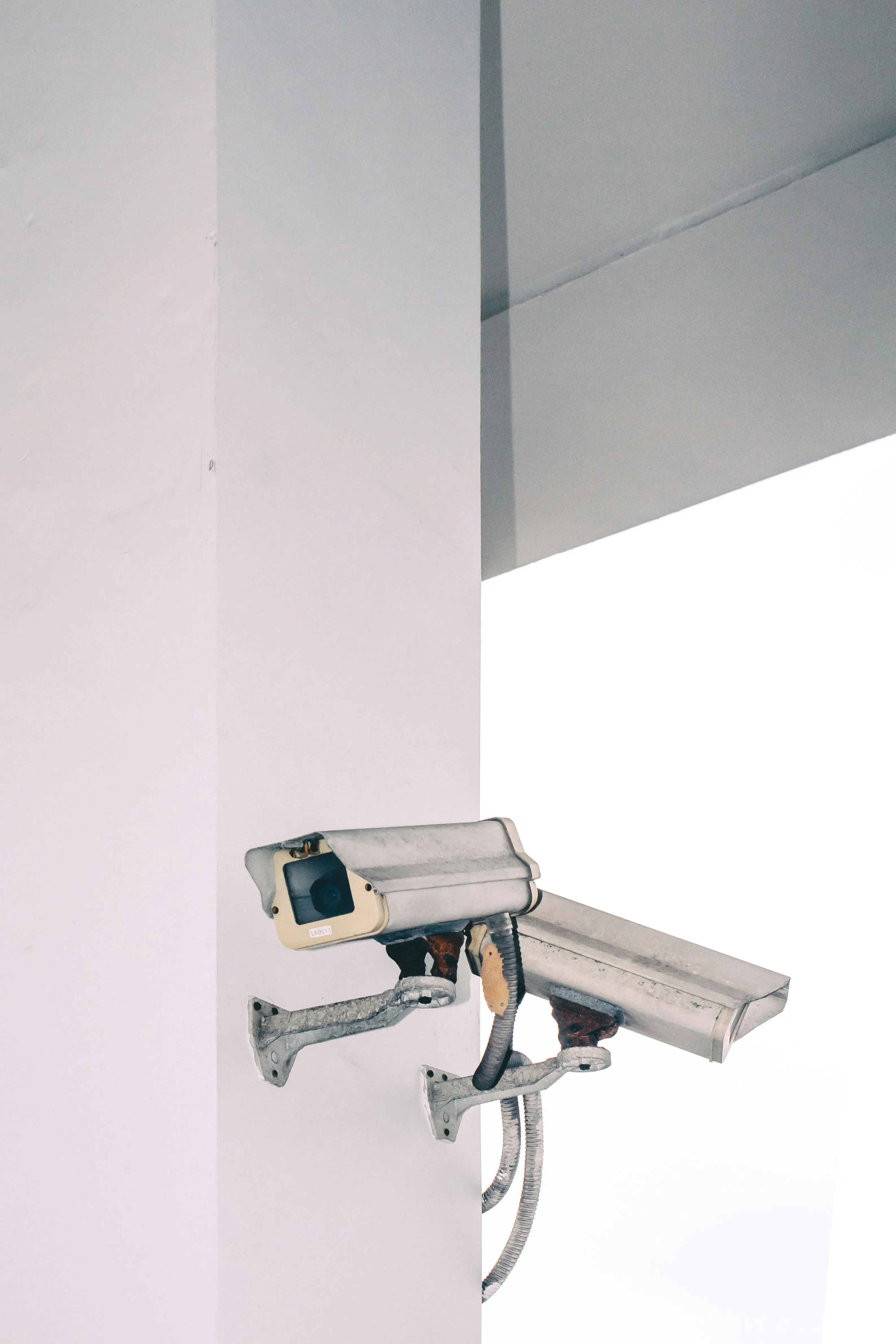
A surveillance system that fails during a security incident is worse than no system at all — it creates false confidence. The most common failures we correct when auditing existing installations are not equipment failures but installation decisions.
- Cameras positioned facing east or west without shade capture sun glare for 2-4 hours per day, rendering footage useless during those windows
- Cameras without IR illumination produce black footage at night even when the camera claims night-vision capability
- NVR recorders on the same power circuit as the main supply go offline during power cuts — the exact moment they are most needed
- Hard drives in NVR recorders require 2-4 weeks of continuous footage storage minimum; many installations are configured for 3-5 days
- Cameras mounted too high cannot capture facial recognition-quality footage; optimal mounting height for facial identification is 2.5-3.5 metres
06 — Automation infrastructure planning
Smart automation is not a product you install. It is a system architecture you design. The most expensive automation mistakes occur when devices are purchased before the network, power, and data infrastructure is in place to support them.
- All automation requires stable, low-latency network infrastructure — a consumer-grade router with intermittent connectivity will cause smart devices to behave unpredictably
- Smart lighting requires neutral wire at every switch point — retrofitting this in an existing property requires significant electrical work
- Access control and intercom systems require dedicated structured cabling — Wi-Fi-only systems are unreliable for security-critical applications
- Plan for power conditioning at the automation controller level — voltage spikes will corrupt firmware and damage controllers
- All automation should have a manual fallback — a smart gate that cannot open manually during a system failure is a security and safety hazard
Have a specific engineering question?
Our team is available to answer questions before you commit to any investment.